
2004 HGCA Market Outlook Conference
- Monday October 18, 2004
This analysis featured in the October 18, 2004 issue of the HGCA's MI Prospect, Volume 7, Number 8
Key points
- Further cereal market volatility expected
- Shifting consumer preferences will affect demand
- Farmers need to plan to avoid risk
- Environment related market opportunities are emerging
- Economic conditions are expected to continue volatile
While this year's favourable global harvest is expected to meet expanding demand for cereals, carryover stocks are not expected to recover. The poor quality of the UK harvest has added to the challenge of lower prices. Markets can be expected to continue to be volatile with changing crop prospects in 2005. General economic conditions can also be expected to be volatile. Farmers need to know their businesses and have plans so reduce their risks in this situation. They should, however, also be aware of market opportunities arising from shifting consumer preferences and environmental concerns.
Market Outlook for Cereals and Oilseeds
Julian Bell, Senior Economist HGCAThis year, in contrast to last, global grain production prospects improved as the year progressed(Graph). With harvesting of north hemisphere crops all but complete world wheat production is estimated to be a record 614 Mt, 25Mt above early expectations.
continue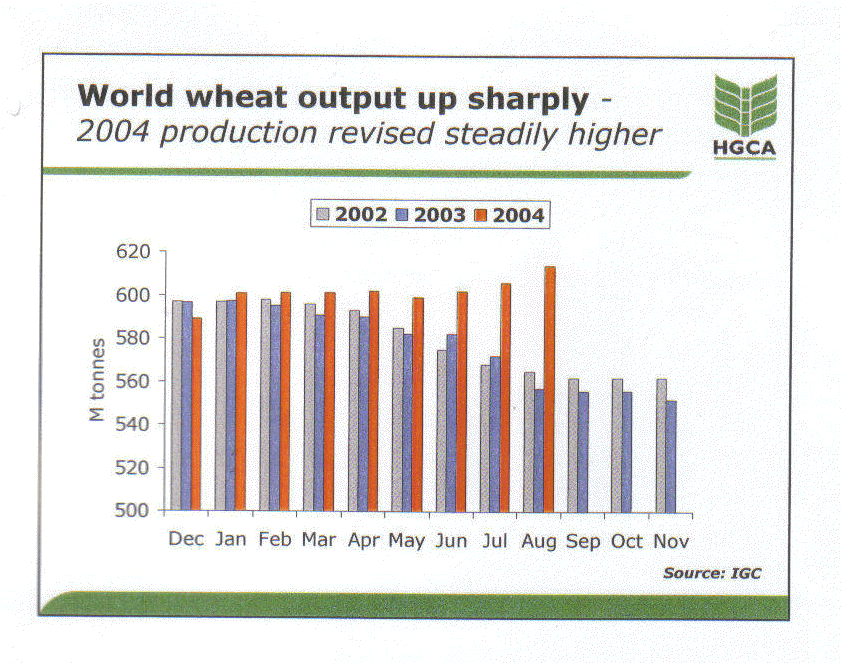 Source: IGC
continued
EU grain output recovered to 281 Mt, 18 percent above last year's drought reduced level. A similar recovery in output occurred in the Black Sea region. Most significant for world grain markets, however, was the near ideal crop development conditions for the US maize and the expectation of a 278Mt crop, 22Mt higher than last year's record crop.
For the UK informal estimates for 2004 wheat output range from 15.3Mt to 15.8Mt and exports between 3.0 Mt and 3.5 Mt. The main issue, however, has been a sharp decline in quality following the wettest August since 1956. UK forward wheat prices for November 2004 have fallen £28 from highs set last November. Because of a large EU surplus, strong international competition, concern over the effectiveness of intervention in new EU member states and quality consideration, UK feed wheat futures prices have been driven £8 below intervention. At the same time milling premiums have widened to £30 in the north due to kinited suoolies of quality wheats.
Despite record 2004 world wheat and coarse grain production, world stocks have barely recovered, leaving the world's buyers vulnerable to any major crop problems in 2005. Market volatility can be expected to continue.
Marketing - Visions of the future: Food consumption trends
Richard Lowe - Marketing Director, Meat and Livestock CommissionFood consumption patterns have been affected dramatically over the years by the increase of women in the workforce, increased time spent in commuting and a plummeting in household size. The traditional practice of eating breakfast and routine family meals at home has diminished.
Food choice is being driven by the health, convenience, self indulgence and combinations of them. About 60 percent of in-home meals are chosen for quick to cook or convenient to prepare, with only 22 percent of in-home meals having more than two people present. Increasingly supermarket shelves reflect this with simple to prepare and small portion products. While consumers are prepared to pay for this, value seekers are becoming condition to lower food prices. Consumers generally know what is good for then but often do not select accordingly, preferring to indulge themselves. Government expects the food industry to play a lead role in addressing food health issues resulting from inappropriate diets.
Bread consumption is well placed in the context of changes in eating habits as it features more in light than main meals and has not been dramatically affected by household size reduction. Growth in speciality bakery ranges has also resulted in increased sales.
Price Risk Management: How price protection works in practice
Dale Crawford, US Grain Producer, Central IllinoisTo be effective in risk management a farmer must know his individual business. He needs to have a plan so that he knows what can threaten his business and take action to protect it if necessary.
A business plan is essential if decisions are to be made in times of risk. The use of these tools should be an integral part of the farm plan, so decisions can be made rationally and not be affected by emotion.
Biofuels and Alternative uses for Cereals and Oilseeds: will they make you money?
Alastair Dickie, Director Crop Marketing, HGCACereal crops in the UK, as a renewable resource, have a yet to develop a role in supplementing depleting mineral resources in such uses as energy and packaging. Opportunities exist for crops to recycle carbon dioxide which otherwise might contribute to further global warming.
With oil prices strong and grain prices weak the potential for this is very evident. This opportunity is being exploited by Brazil with sugar and US with maize. If developed effectively, this opportunity could benefit UK cereal growers by the difference between import and export parity prices.
It is envisaged that this would require contractual arrangements for growers, the effective environmental branding of biofuels and products, and the participation of fuel retailers with the supermarkets chains being the most likely partners.
World Prospects: A US View of markets and market developments
David Blandford - Penn State University, USA framework for completing the Doha WTO round of trade negotiation was agreed in July, but with much detail still to be worked out, it is unlikely to be completed before 2007. US growth has been robust outstripping that of all other industrial countries, but growth in earnings has been modest and international political uncertainty continues. The US continues to run a large trade deficit.
Oil prices have risen by 48 percent in US dollar terms but by less than one percent in euros. Robust world demand for cereals, with the rapid growth in livestock production in Asia and particularly China, has not been matched by increased supply since 2000/2001. World stocks are low but world feed and livestock markets will adjust if growth in supply can not keep pace with demand.
A period of greater uncertainty in world commodity prices and international economic conditions is anticipated.
David Walker
'phone: 01603 705153
top of page