
Oat Situation and Outlook
- Monday November 15, 2004
This analysis featured in the November 15, 2004 issue of the HGCA's MI Prospect, Volume 7, Number 10
Key points
- US main oat importer
- Canada, Sweden and Finland main oat importers
- Uncertainty over Canadian oat quality this year
- Oat prices at a premium to maize
- Larger Polish oat production
Prospects for European oat prices are tied to improved supplies of other feed grains, prices for which are expected to remain intervention bound. With Canadian supply prospects in doubt, the focus of the Scandinavian trade is expected to revert to the US market.
International Situation
International trade in oats is very limited, usually only about seven or eight percent of world production. And there are just four major players. US imports normally account for 70 to 80 percent of world trade on one side of the market, and Canada, Sweden and Finland together account for 80 to 90 percent of world exports on the other side(Graph 1).
continue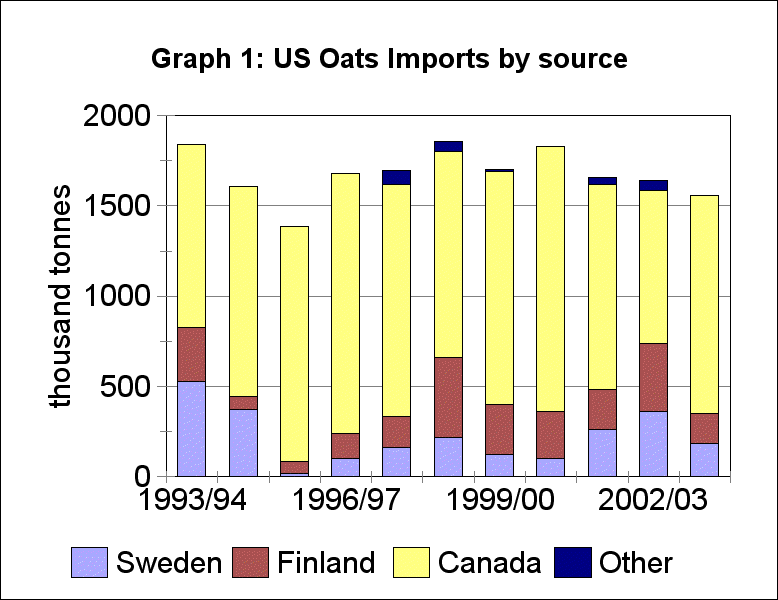 Source: USDA
In normal Canada supplies the major US oat millers in the northern US Mid West just across the boarder from Prairie production areas and to a lesser degree the US western seaboard. Sweden and Finland tend to supply US eastern seaboard and Gulf Coast markets. As oats are bulky, it is expensive to ship oats either to or from the coast to the central US.
Canada’s ability to supply its market is dependent on the quality of its oats harvest and particularly supplies of heavy oats. Swedish and Finnish trade has, since they joined the EU in 1995, been largely restricted by the 400,000 tonne limit on the EU’s special export subsidies for oats.
While US consumption for food and speciality feed, including equine, markets appear relatively insensitive to price, supplies from the three major exporters are generally more than adequate for these markets. Oat prices are, therefore, usually at a discount to other feed grains because of their lower general nutritional value. Following drought reduced Prairie oat crops in 2001 and 2002, the supply of quality Canadian oats was severely restricted and US oat prices were at a substantial premium to other feed grains such as maize(Graph 2). This provided an opportunity for Swedish and Finnish oats to be exported to the US with trade exceeding the 400,000 tonne EU export restitutions(Graph 1).
continue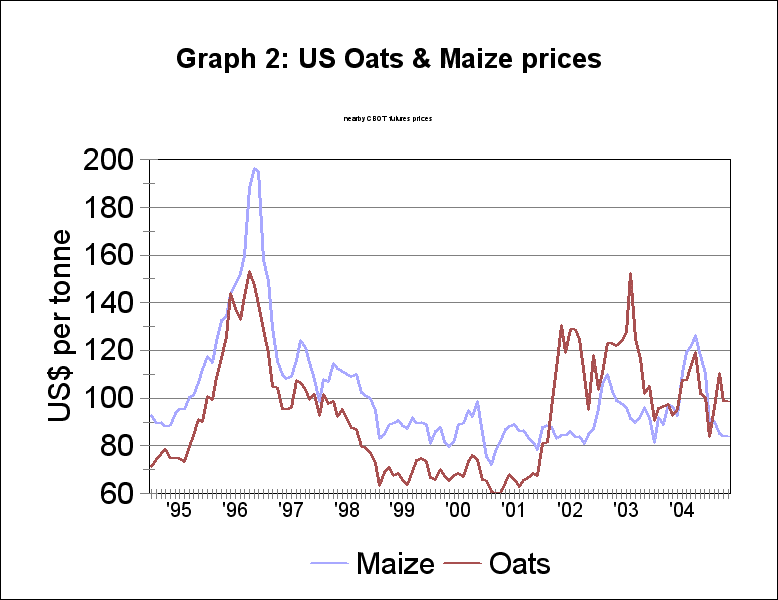 Source: Alberta Agriculture AgData
continued
continued
With a recovery of Canadian oat production last year and early expectation for a normal crop this year, oat prices reverted to their more usual discount to maize. The combination of a late crop and an early frost, however, has placed considerable uncertainty of the adequacy of supplies of Canadian oats for its normal US markets, and US oat prices are again at a premium to maize.
Statistics Canada production estimate made in early September, after the first frost but before much of the crop had been harvested, was for about 3.5 million tonnes which might suggest supplies are adequate for normal market needs. It was not until early October before much of the crop was harvested and some of it is now under the snow. A further downward revision in output can be expected but the biggest unknown is the quality of the harvest.
But this is probably reflected in the US$15 to 20 per tonne oats premium over maize. Because of low maize prices, the depreciation in the value of the US dollar and exceptionally high ocean freight costs, this is not reflected in opportunities for Scandinavian oat exports without export subsidies which are current about 30 euros per tonne.
European Situation
European oat production was estimated by COCERAL in September at 8.9 million tonnes, about two percent more than last year. The increase is almost entirely due to a larger area and improved yields in Poland. Both Swedish and Finnish output are slightly down on last year and may be revised down further in future estimates. Harvesting conditions in Scandinavia were difficult. The implications of a larger Polish crop are unlikely to be significant as it has not in the past been a large exporter.
In a general context, prospects for European oat prices are tied to improved supplies of other feed grains, prices for which are expected to remain intervention bound. And the focus of the Scandinavian trade is expected to revert to the US market.
UK production is estimated at 652,000 tonnes, 9 percent below last year. After two large crops, UK farmers reduced the area sown to oats by 11 percent. This was to be expected as prices were last season disappointing relative to other cereals (Graph 3). With UK supplies about a third larger than normal, there was pressure to find export markets.(Graph 4)
continue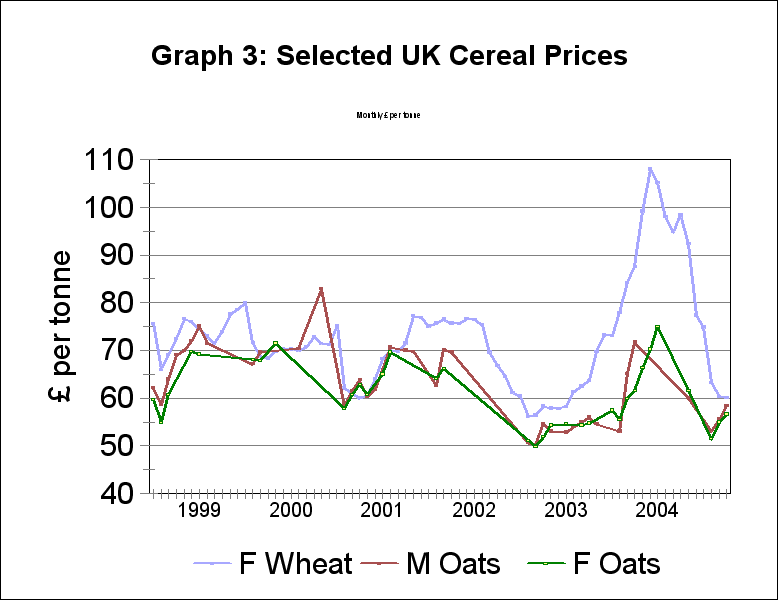 Source: HGCA
continued
With potential UK export supplies of about 85,000 tonnes, compared with actual exports of 119,000 and 160,000 tonnes last year and the year before, oat prices are, relative to other feed grains, likely to be higher, but, of course, lower in absolute terms. Quality in terms of weight and screenings is generally good, but discolouration of oats harvested after the rain is an issue for millers.
continue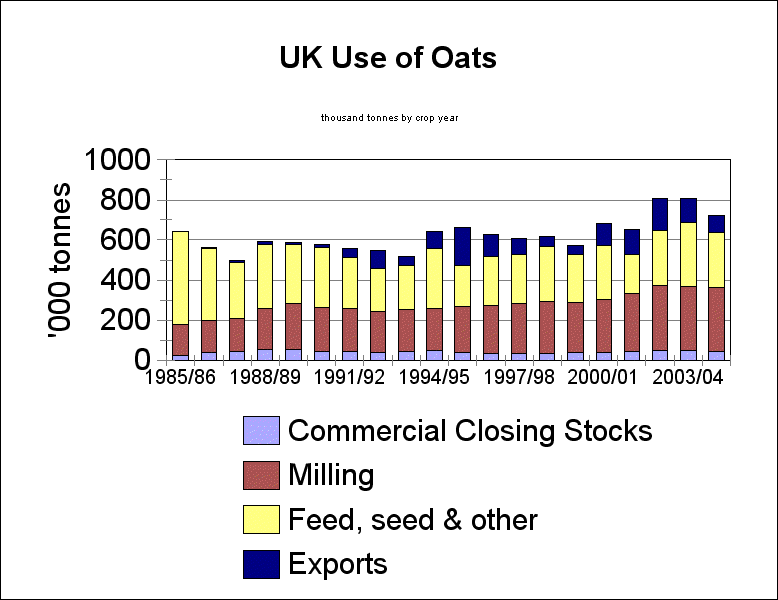 Source: HGCA
continued
Longer Term Issues
Of the 10 member states joining the EU this year, only Poland is a significant oats producer. With its larger crop this year Poland will be the larger producer of oats in the EU. While Poland has exported small quantities of oats on an inconsistent basis in the past, there is some concern that area will be shifted from rye to oats with the potential for Poland becoming a more consistent exporter. Against this, because of climatic conditions, it may be difficult for Poland to meet the quality specifications of oat millers.
The impact of the mid term review on EU oats production is, of course, uncertain. The special export restitution provisions for Scandinavian oats have survived. But oats are often gown in less favoured conditions suggesting that land retirement may be greater for oats then other cereals. Against this many Scandinavian farmers receive more payments from LFA programmes than the CAP. In the shorter term prices of oats relative to other cereals are such that farmers who have the option will continue to shift area to other cereal crops.
EU oats have been included by the US on a long list of possible commodities against which it may impose tariffs, if they are unable to resolve a trade dispute over increases in tariffs implicit when the 10 new member states joined the EU. As the major beneficiary of a tariff on EU oats would be Canada, there is little domestic political incentive to select oats. Further Sweden and Finland are probably not viewed by the US to be influential in EU policy formulation and, therefore, not an effective target for the US trade policy. And in any event it will many months before any such tariffs could be imposed.
David Walker
'phone: 01603 705153
top of page