
Fuel and Fertilizer Situation
- Tuesday April 17, 2007
This analysis featured in the April 17, 2007 issue of the HGCA's MI Prospects, Volume 9, Issue 20
Key points
- US farm production expenses to increase by nearly 6% this year
- US fuel and oil, fertilizer and lime costs increased by 33 and 27% respectively over the last three years
- US energy and fertilizer components are nearly 50% of maize operating cost, but only 26% for soyabeans
- UK energy and fertilizer costs have increased by 30 and 15% respectively over the last three years
The larger than anticipated increase in the US maize area is anticipated to result in increased demand for fertilizer particularly for nitrogen. With the US now very dependent on offshore supplies, there is the potential for shortages which has already resulted in higher prices to lead to less maize and more soyabean area than currently anticipated. UK fuel and fertilizer prices have generally increased by the same magnitude as US prices, but declining use of fertilizers and a lesser degree of fuel has held expenditures relatively stable.
US
The US Department of Agriculture (USDA) forecasts that US farm production expenses will increase nearly 6% this year to US$251.7bn (Table 1). Over the last three years production expenses have increased by 20%, or by about US$40bn. Fuel and oil, and fertilizer and lime costs have increased by 33 and 27%, respectively, over this period. But together they are less than 12% of industry’s total cash expenses.
continue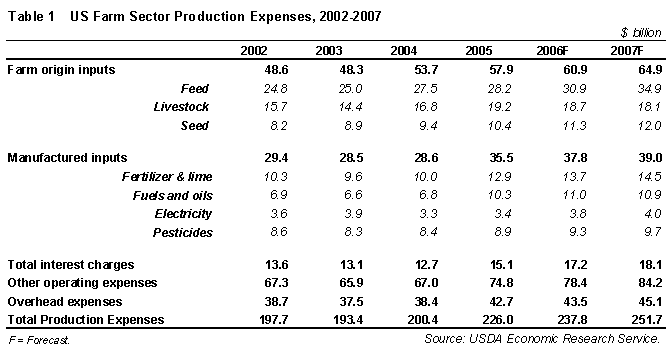 continued
These two expense items are, however, more significant in cropping operations. USDA data suggest that the energy and fertilizer components are almost 50% of operating costs for maize, 26% for soyabeans and 53% for wheat (Table 2). In years when these cost items increase significantly and are also very volatile, they have the potential for influencing farmers’ crop selection as was the case last year. As maize production costs, particularly for fertilizer and fuel, are much higher than those for soyabeans, the prospect for higher costs could, other things being equal, result in extra soyabean plantings.
continue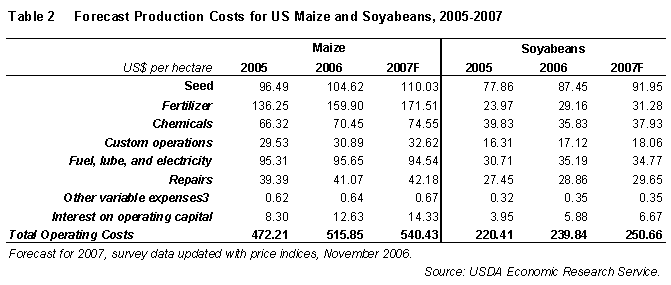 continued
Over the last 12 months US energy prices have generally been on a downward trend and more stable than they were a year ago. Crude oil prices were at record price level of US$70 per barrel last summer but have generally been well below that level since. It, therefore, appears at this time that fuel costs will be a lesser influence on US sowing decision than they were in 2006.
But the matter of availability of nitrogenous fertilizers and, therefore, costs in the context of their supply and demand may yet be a consideration for US farmers. It is generally supposed that natural gas prices will have an overwhelming impact on nitrogenous fertilizer prices, as (in a North American context) natural gas represents between 70 and 90% of the cost of producing ammonia which is used in all nitrogenous fertilizers. While nitrogenous fertilizer prices have moved in the same direction as domestic natural gas prices, the relationship has not been as tight as might be expected.
The reason for this is almost certainly because the US imports over half of its nitrogenous fertilizer supplies from offshore sources which may have much lower natural gas costs. Trinidad and Tobago, Canada and Russia have been the US’s traditional sources. However, in recent years the US has sourced more heavily and widely from Eastern Europe and also from Persian Gulf states.
These imports have undoubtedly resulted in lower fertilizer prices for US farmers over the years, but they do raise the issue of security of supply. This may well be a market factor this spring with the prospects of not only a much increased maize area, but also an increase that was not fully anticipated by the industry (see 2007 Prospective Planting article). The supposition is that many of the US’s sources for nitrogenous fertilizer are too distant to be able to deliver in the necessary time frame to meet the demand from those extra acres.
Nitrogenous fertilizer prices have already increased significantly in the context of this anticipated shortage rather than in response to natural gas prices which have been relatively stable (Table 2). It should also be noted that the USDA’s cost projections were made in November before the recent rise in fertilizer prices occurred. The recent increase in prices if it is sustained together with a late planting season may result in a smaller area of maize actually being sown than indicated by US farmers in early March in their response to the USDA’s Prospective Plantings survey.
UK
DEFRA recently recognised concerns about the impact on agriculture of crude oil price increases by adding a new chapter entitled Intermediate Consumption to its annual report ‘Agriculture in the United Kingdom 2006.’ It noted that ‘in recent years, increases in crude oil prices have led to increased concerns for the impact of high oil prices on the margins and profitability of agricultural businesses, which are dependent on products derived from petroleum, notably fuels.’ It noted that expenditures on both fuels and electricity have risen by more than 500% since1973 despite the use of the former falling by 60%. Fertilizer expenditures were noted to have levelled out with declining use offsetting increasing prices.
UK farmers are faced with the same cost challenge as their US counterparts as is evident in increases in energy and fertilizer costs of 30 and 15%, respectively, over the last three years (Graph 1). Since 2000 the European Union has imposed antidumping duties on imports of urea and ammonium nitrate originating in Algeria, Belarus, Russia and Ukraine. This has probably resulted in nitrogenous fertilizer prices being higher than they would otherwise have been. However, the difference in the increase in prices compared with the US does not seem to be significant.
continue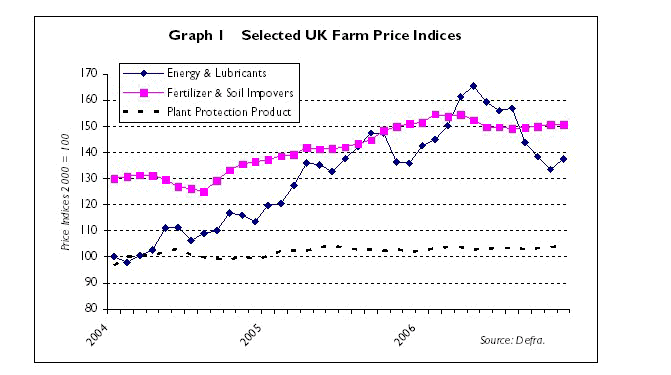 continued
If US demand for fertilizer does result in a bubble in prices which spills over into the international market, its impact on the UK will likely to be quite limited as fertilizer application for most arable crops will have been completed.
The larger than anticipated increase in the US maize area is anticipated to result in increased demand for fertilizer particularly for nitrogen. With the US now very dependent on offshore supplies, there is the potential for shortages which has already resulted in higher prices to lead to less maize and more soyabean area than currently anticipated. UK fuel and fertilizer prices have generally increased by the same magnitude as US prices, but declining use of fertilizers and a lesser degree of fuel has held expenditures relatively stable.David Walker 001 780 434 7615
top of page