
Outstanding US Export Sales
- Monday July 7 2008
This analysis featured in the July 7, 2008 issue of the HGCA's MI Prospects, Volume 11, Issue 1
Key Points
The level of outstanding US export sales is probably a good reflection of the anxiety of importers over the adequacy of world supplies. For wheat, outstanding US sales tripled between June and October 2007 as global supply prospects diminished. They have declined from that peak as this year’s crop prospects have improved. For maize the peak was in February as concern related more to this year’s supplies. Outstanding soyabean sales are more seasonal in nature and may currently reflect switching of cargoes from strike prone Argentine ports.
History and Mechanics - US sales reporting dates back to the early 1970's and the cold war era when the Soviet Union purchased very large quantities of grain. By placing orders simultaneously through a number of different grain companies, the Soviet Union was able disguise the full extent of its aggregate purchases. This was viewed as being politically unacceptable and consequently the current reporting system was put in place.
Each Thursday mornings, except following long weekends, the USDA reports on sales made the previous week for the major grains - by class for wheat and other farm commodities, by destination and by crop year. Further cumulative outstanding sales for the crop year, sales less physical exports, are reported together with the sum of cumulative outstanding sales plus physical exports. Individual sales more than 100,000t are published within 24 hours of being reported.
This weekly export sales information has developed into a significant market barometer. The level of reported sales each week is compared with surveyed trade expectations, which provides a pulse on trade activity relative to general perceptions, while outstanding sales provide a measure of buyer attitudes to the market. The sum of export inspection plus outstanding export sales provides a measure of progress towards projected exports for the crop year and the potential for revisions of projections with their implications for other supply and demand elements.
Wheat - What has been unprecedented over the last twelve months has been the volatility in outstanding export sales. For all wheat outstanding export sales which normally run at less than 4Mt, tripled in a few months to more than 12Mt in October 2007 (Graph 1). This coincided with a rapid advance in prices and reports about lower crops in Europe and Australia. As a result the very tight supply situation developed.
When global grain supplies are adequate, importers of US grain tend to commit no further forward than the time needed to charter vessels and get them to US ports. The tripling of outstanding US export sales of wheat was, of course, not indicative of a tripling of purchases for the year as whole, but rather the securing supplies earlier than normal. It is something of an ‘index of anxiety’.
The ballooning of US outstanding sales was something of a one-off phenomena. Once importers had secured their requirements from old crop supplies, any source of anxiety switched to new crop outlook. So while old crop prices advanced again early in 2008, new crop supply prospects were beginning to improve, and importers had reason to become less anxious over securing supplies well in advance. The level of US outstanding sales of wheat trended lower as old sales commitments were met and replacement sales were delayed (Graph 2) . However, current outstanding export sales are about twice the as normal regarded level a year ago. This suggests that some level of anxiety remains despite improved global wheat prospects.
Maize - The situation for US maize sales is generally similar to that for wheat, although the numbers are larger as physical exports are larger, and the timing has been a little different. Under normal circumstances outstanding US maize export sales run between 5M - 10Mt. The greater variability may relate to US maize trade accounting for a larger portion of total world feed grain trade (Graph 3) .
Outstanding export sales of US maize peaked at over 20Mt in February 2008, about four months later than for wheat. The delay can be explained with the 2007 record US maize crop, which meant that supply was not an issue for importers. However, once the major shift in 2008 US plantings from maize to soyabeans became apparent, cause for anxiety increased. And when it became evident that the switch would be less than first anticipated, the level of outstanding sales declined.
Currently, concern for US maize production prospects has emerged with delayed crop development. At the same time improved prospects elsewhere have provided the prospect of better alternative sourcing opportunities than last year to the currently very expensive US maize. Outstanding maize export sales at just over 13Mt are about where they were last year. But new crop, after September 30, sales are actually below year ago levels.
Soyabeans - The level of outstanding US soyabean export sales is very seasonal, typically peaking in December after the US’s Northern Hemisphere harvest and troughing in April when Argentine and Brazilian Southern Hemisphere harvests are available (Graph 4). The range in outstanding sales is rather wide, at 3M - 9Mt. With record ending stocks from the previous year 2007/08, supplies were not a major issue despite the sharp decline in US output. Currently, a rise in US planted area is expected, so the anxiety level may be relatively low.
The seasonal pick-up in outstanding US sales appears to be occurring earlier than usual. But this almost certainly reflects the switching of soyabean cargo sourcing to the US from Argentina as a result of their ongoing farmers’ strike. When the strike is resolved, a correction will surely occur.
continue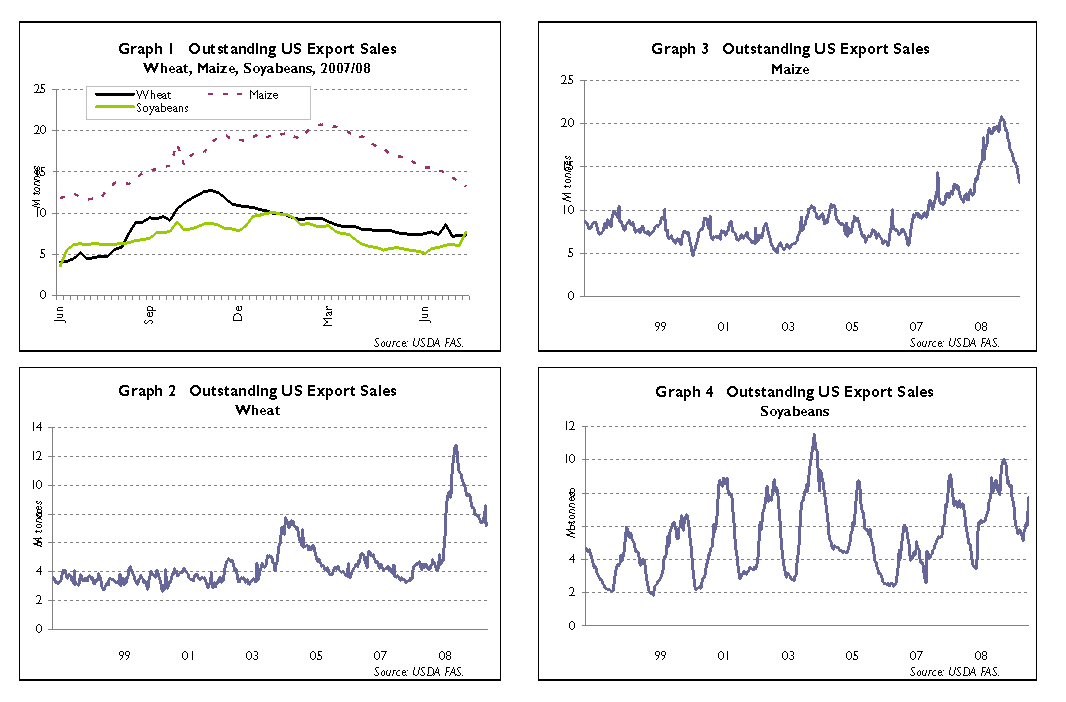
David Walker 001 780 434 7615
top of page