
North American Crop Update
- Monday August 18 2008
This analysis featured in the August 18, 2008 issue of the HGCA's MI Prospects, Volume 11, Issue 4
US and Canadian crop prospects are more favourable than a year ago, and the recovery in US maize and soyabean crop conditions over the last two months has been quite remarkable. Canadian crops have above average yield potential but are late maturing.
US Winter Wheat
US farmers planted 18.9M ha of winter wheat last autumn, 3% more than in 2006, and the largest area since 1998. Almost all of the increase occurred in Soft Red Winter wheat states, east of the Mississippi. The previous year there had been an 11% increase in area, most of which was Hard Red Winter. While almost 23M ha were devoted to winter wheat, some of that area has been contracted to the Conservation Reserve Program, and some has been lost to more drought-tolerant maize (Graph 1).
continue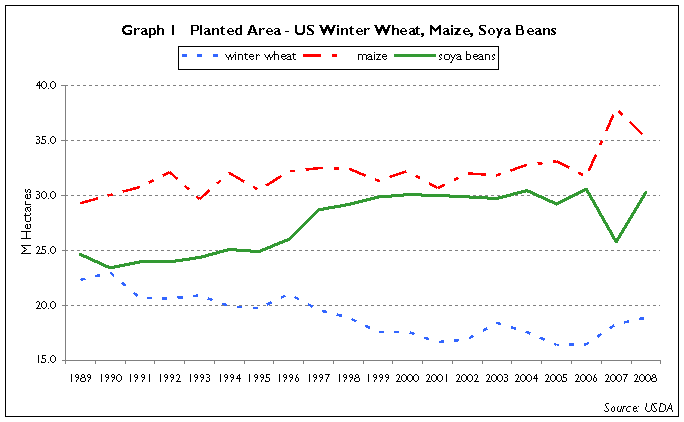
While winter wheat planting conditions were relatively favourable, crop ratings slipped during the growing season. Since the spring, however, the crop was generally in better condition than normal and yields have been above average. The crop is estimated at 51Mt (24 % above last yr).
US Spring wheat
Total planted area this spring was up 10% at 6.8M ha, with durum area up 23% and other spring wheat up 7%. The crop was in excellent condition earlier, but suffered from lack of moisture in some areas, resulting in lower yield expectations. Total durum and other spring wheat production is currently forecast at 2.4Mt and 13.6Mt, respectively, 21% and 5% above last year.
US Maize
US farmers have reduced plantings of maize by 7% from last year’s near record levels, to 35.2M ha. Because of wet field conditions in the spring, including flooding, there has been considerable concern over area and yields.
continue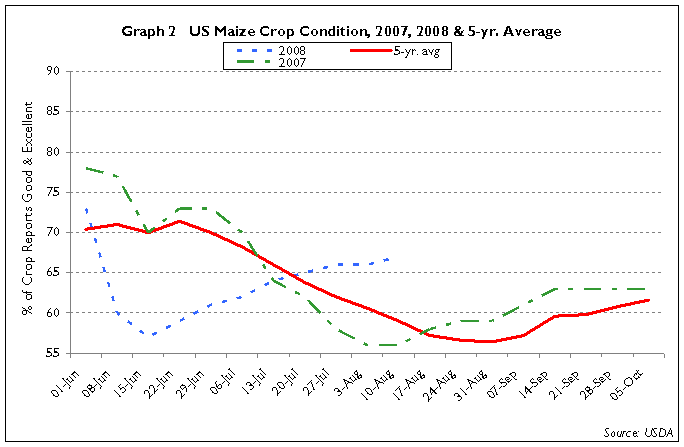
Harvest prospects have improved on very favourable conditions. The USDA estimates that the crop will yield 9.7t per ha, second only to the 2004 yield. Total production is estimated at 312.1Mt, 6% below last year’s record crop.
US Soyabeans
Soyabean production prospects were, as a result of the extremely wet field conditions in the spring, subject to the same uncertainty as maize. Farmers planted 30.3M ha, 17% more than in 2007.
As with maize, generally favourable crop conditions have improved prospects. However, yields are projected at 2.73 t/ha, which would be the lowest since 2003. Total production at 80.9Mt is 15% above last year’s output. The crop has yet to complete podding, so the yield is still at risk.
US Market Prospects
The US will likely have an extra 6.3Mt of wheat this year, but export prospects are likely to be diminished by increased supplies from other major exporters including the EU-27, Australia and the Black Sea region. The USDA forecasts exports of 27.2Mt, 6% below last year.
The USDA has however, started scaling back increases in projected livestock feed consumption of wheat, as wheat prices have not been competitive enough to encourage this. Even though SRW futures prices have declined to less than $300/t, well below peak values last March, they are still more than 25% above a year ago when the supply situation was much tighter.
The USDA’s August production survey report raised expectations for maize supply this year by almost 15Mt. At 352.4Mt, it is less than 4% below last year’s record level. The USDA however, projects that due to increased ethanol usage and unchanged exports, a reduction in ending stocks by almost 30%, to 28.8Mt, is expected. This would be the lowest stock level since 2004.
With the increase in 2008 soyabean production, the USDA sees the 2008/09 position very similar to 2007/08. The increase in production this year is about equal to the reduction in ending stocks last year.
Canadian Prospects
Conditions for crop development have been favourable on the Canadian Prairies. Most areas have received average or above-average levels of precipitation this summer, but temperatures have been more of a concern. As a result of relatively damp conditions, vegetative growth has been excellent with the potential for above average yields.
continue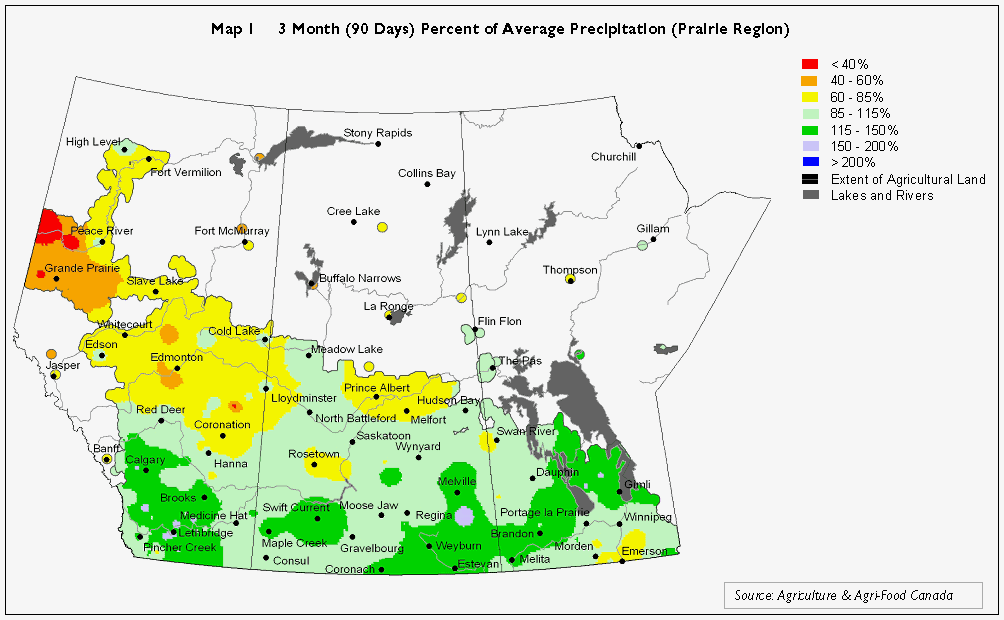
However, maturing of crops has been slow and harvest will likely be delayed by up to ten days, unless there is some hot weather between now and the end of the month, which could also have some significant quality implications. The quality of the '08 crop is therefore not expected to be as high as in '07.
Statistics Canada’s first survey-based crop estimate is not published until the end of August. However, the Canadian Wheat Board, using a weather model and industry contacts, forecasts a western wheat crop of 16.9Mt. Together with a very much larger eastern Canadian crop, this suggests total Canadian wheat production of 19.9Mt, an increase of about 20% from last year. On the same basis durum production is projected to be 5.2Mt, up about a third from last year. Barley production is projected at 10.1Mt, marginally below a year ago, with reduced area offsetting improved yield prospects.
Export potential will depend on the quality of the Canadian wheat crop, as well as the competitiveness of US maize imports for animal feed in Western Canada. In 2007/08, Canada imported about 2.8Mt of US maize, much of it used in western Canada allowing more Canadian grain to be exported (from the east) than would otherwise be the case.
Yields of other crops, notably Canola and field peas, are expected to be higher this year. In eastern Canada, farmers reduced maize area, seeding more soyabeans. Maize yield prospects are reported as not being quite as favourable as last year, while soyabean yields are expected to be somewhat improved.
Conclusion
Overall, winter crop prospects for North America look good so far. However with the winter grain harvest nearing completion, attention will now begin to shift to the spring crops, particularly maize and spring wheat, and any potential problems would still affect the balance sheet, and the market.
David Walker 001 780 434 7615
top of page