
Ocean Freight Rates
- Wednesday August 19, 2009
This analysis featured in the August 19, 2009 issue of the HGCA's MI Prospects, Volume 12, Issue 4
After reaching record levels during the first half of 2008, ocean freight rates typically fell by more than 80% in the second half of 2008. They have since recovered some of the losses but are not expected to regain anything close to year ago levels in the foreseeable future.
Freight rates for heavy grain shipment from US Gulf to EU ports have ranged from US$88 to US$17/t during 2008, or, from more than a third of the value of a cargo of soft red spring wheat to less than 10% (Graph1).
continue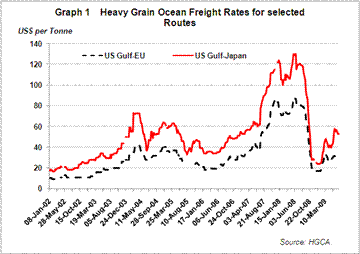
Freight rates for grain and oilseed cargos are dependent on overall freight demand conditions, as grains compete with other commodities for ocean shipping services in the dry bulk sector of this market. The volume of international trade for most of these commodities including iron ore, coking and steam coal and steel is very dependent in global economic conditions. From a shipper's perspective ocean freight rates are determined by the interaction of the demand for vessels to transport cargoes and the supply of vessels to provide this service. So in addition to this demand factor stemming from level of international trade is the supply factor stemming from the size of the dry bulk ocean vessel fleet.
For many years and until 2003 the supply of vessels seemed to more than match the demand for cargo movement. Freight rates remained at levels favourable to shippers but were not high enough to encourage owners to expand the dry bulk fleet which was in any event not being fully utilised. This situation changed rather abruptly in 2003 with the continued expansion in dry bulk commodity trade and particularly that for coal and iron following increased Chinese demand.
Since then freight rates have been volatile, but have proved to be at an incentive level for the supply of vessels (Graph 1). The balance between supply and demand was further exasperated by port congestion as vessels rode at anchor either waiting for cargoes at one end or waiting to discharge at the other.
Building of vessels takes time and the first supply response was the rather immediate decline in the rate of deletions, scrapping old vessels (Graph 2). This was followed by an increase in additions to the fleet or new vessels. And this trend is expected to continue for at least a year as commitments to build new vessels made at a time of record freight are completed.
continue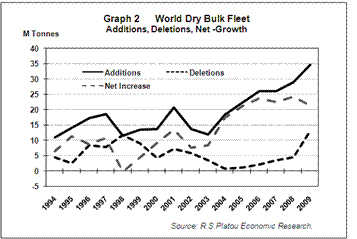
However, the more immediate response to the collapse in ocean freight rates has already occurred with an increase in deletion or scrapping of old vessels. During the first six months of 2009 deletions exceeded those of 2008. This will reduce the rate of expansion of the fleet but possibly not to the level of prospective growth in world trade. Also, adding to the effective size of the fleet is a decline in the number of vessels waiting to load or discharge cargoes but this is a one time addition and could reverse if trade picks up. The impact of the conversion of tankers to dry bulk service may be similar.
The sudden downturn in ocean freight rates coincided with the collapse of financial markets in autumn 2008 and is almost certainly an indirect result of it. The failure of credit markets was almost immediately reflected in consumer demand and shutting down production including steel. Trade in iron ore and coking coal preceded this.
By early 2009 global steel production was reported to be running more than 20% below a year ago's levels with that of developed economies closer to 50%. Chinese production seems to have managed to maintained marginal increases, but this is in marked contrast to levels of expansion of around 30% seen in 2005. This kind of economic meltdown was not anticipated a year ago and while recessionary conditions were emerging in the developed world, it was anticipated that investment prospect would allow for continued expansion in basics such as steel. Prospects for the change in global steel production for 2009 from 2008 have been revised from a 5% growth to contraction of 10% over the last 12 months.
For larger image click hereThis kind of contraction is not characteristic of conventional business cycles but rather was likely the result of the financial meltdown. The implications of this is that once financial markets have recovered their confidence, economic recovery may occur quite quickly. The Australian Bureau of Resource Economic projects a 6% growth in global steel production in 2010 which is getting back toward growth rates experienced before 2008 (Table 1).
continue
Outlook
Some recovery in charter freight rates has occurred in recent months particularly for Cape sized vessels (Graph 3). These larger vessels are preferred for iron ore and coal shipment where more specialised port facilities are used. Panamax sized (60,000 to 70,000t) and smaller Handimax and Handy sized vessels tend to be used for grain, as sources and destinations for cargoes are more dispersed than for industrial commodities. When the gap between Cape and Panamax rates widens, these smaller vessels will be used for the industrial commodities and rates for smaller vessels tend to follow those for larger vessels. Hence, Cape charter rates are often a lead indicator of future trends in rates for the smaller vessels.
continue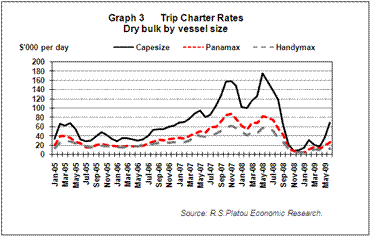
While any forecasts of future ocean freight rates must be considered highly speculative, there is some expectation that at least in the short-term rates for heavy grains will increase. And further, if the worst of the financial crisis is behind us, then ocean freight rates can be expected to hold above the very low level seen at the end of 2008 but very much below the record levels recorded earlier in 2008. Additions to the dry bulk fleet are likely to meet any expansion in international dry bulk trade for the foreseeable future.
The implication of this is that international grain markets faced with lower shipping costs will be more competitive than they have been for some years. Exporters will not be effectively restricted by high shipping costs to competing in markets where they have a delivered cost advantage.
David Walker (001) 780 434 7615
top of page