
UK Weather Update
-Monday, June 10, 2002
This analysis featured in the June 10, 2002 issue of the HGCA's MI Prospect, Volume 4, Number 24
Key points
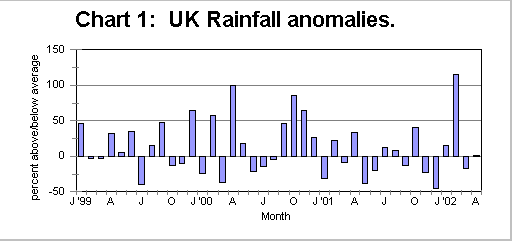
- UK rainfall close to average last autumn.
- Last season well above average
- Crop pattern more normal this season
continueDrilling and growing conditions, so far and for the most part, have been relatively favourable for the 2002 harvest and the development of cereal crops reflect it. This is marked contrast to the situation at this time last year.
continued
continue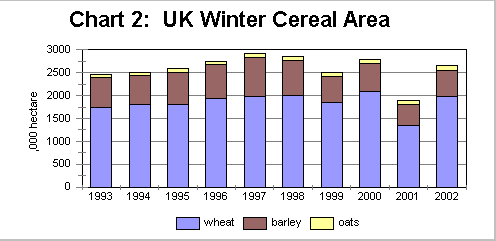
continued
As last autumn was also warmer than normal, winter cereals developed well over the last months of 2001. In contrast, with less than ideal seed beds, crops did not develop well in the autumn of 2000.
Weather has also been relatively good for spring work with March being particularly favourable for field work. Almost all spring cereals, therefore, were drilled on time and into well prepared seed beds. Last year the weather failed to cooperate when farmers were looking to seed as much as an extra 800,000 hectares they had not been able to drill in the autumn and much of the crop went in as much as a month late into relatively poor seed beds. The increase in set aside last year suggests that some plans for drilling were simply abandoned.
Last season's harvest, with smaller than normal area and at best only respectable yields, left the UK with, for the first time in many years, a net deficit in cereal production. With prospects for at least an average crops, the UK will again be a net exporter.
It is also already evident that with better vegetative growth, straw yields will be much improved over last year when many growers benefited from some fancy prices for this byproduct.
David Walker
phone: 01603 705153
top of page